
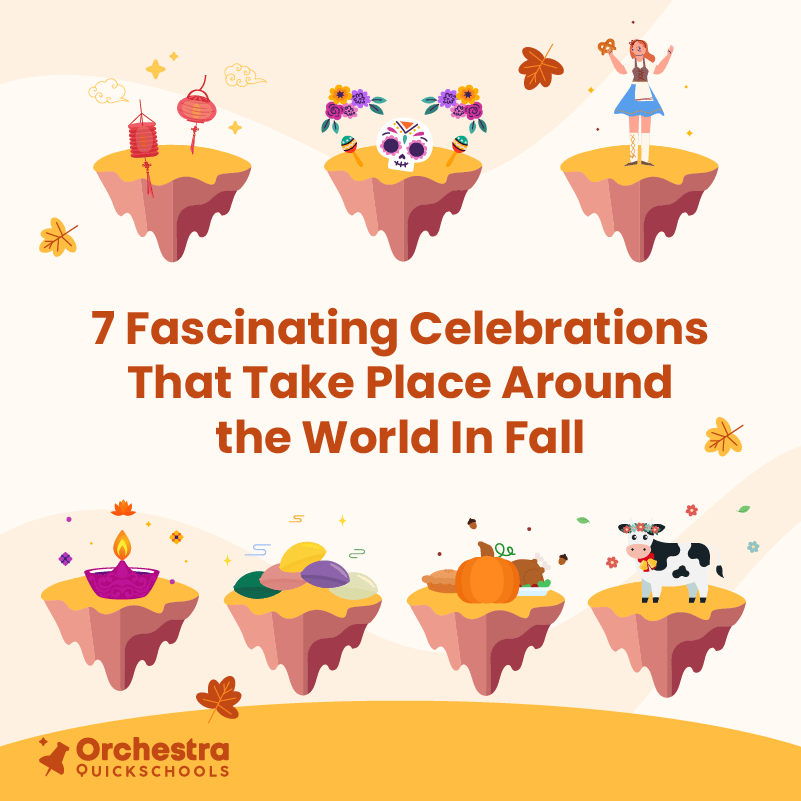
When fall arrives, many students think of colorful leaves, cooler weather, cozy sweaters, and pumpkin-flavored treats. But it looks different around the world. In many countries, it’s a season filled with festivals, family gatherings, and traditions passed down for generations. Let us take a look at 7 fascinating celebrations that take place around the world in the fall that students will love exploring. Whether you’re a teacher looking for a meaningful classroom topic or simply someone curious about how people around the world celebrate, there’s plenty to discover.
Mid-Autumn Festival — China and East Asia
If you’ve ever seen pictures of glowing lanterns, elaborate mooncakes, and families gathering beneath a bright full moon, you’ve probably encountered the Mid-Autumn Festival. Celebrated in China and in different forms across other parts of East and Southeast Asia, the festival takes place on the 15th day of the eighth month of the traditional Chinese lunar calendar. Because the date follows a lunar calendar, the celebrations usually fall in September or October on the Gregorian calendar.
Why is it celebrated?
The Mid-Autumn Festival has roots in ancient traditions associated with the moon, seasonal cycles, and harvest time. Over the centuries, it developed into an important occasion centered on reunion, family, and appreciation.
The full moon is especially significant. Its round and complete appearance has traditionally been associated with togetherness and family reunion. This is why gathering with loved ones is such an important part of the celebration. The festival is also connected with the harvest season, when communities historically had reason to give thanks for crops and enjoy the fruits of their labor.
How do people celebrate?
Families may gather for a special meal, admire the moon, exchange gifts, and enjoy mooncakes together. Mooncakes are perhaps the festival’s most recognizable food. These round pastries come in an enormous variety of flavors and styles, from traditional lotus-seed fillings to regional specialties and modern creations. Lanterns are another familiar part of the celebration. Children may carry lanterns, while communities may organize lantern displays, performances, and public celebrations. There are also traditional stories associated with the moon, including the famous legend of Chang’e, a woman said to live on the moon.
Oktoberfest — Germany

Modern Oktoberfest includes enormous festival tents, traditional Bavarian music, parades, amusement rides, food, dancing, and people wearing traditional clothing. Two pieces of clothing students may recognize are lederhosen, traditionally worn by men, and dirndls, traditionally worn by women. Traditional foods can include pretzels, sausages, roasted meats, potato dishes, and other Bavarian specialties.
What makes it interesting?
One fascinating detail is that Oktoberfest isn’t simply a festival that “celebrates October.” Its history began with a specific event, and its modern identity developed over more than two centuries. That makes it a useful example of how traditions can evolve while still retaining connections to their origins.
Teacher note: Classroom activities can focus on Bavarian history, music, food, geography, clothing, and traditions rather than the adult aspects of the festival.
Day of the Dead — Mexico
Few celebrations that happen in the fall are as visually distinctive as Día de los Muertos, or Day of the Dead. Observed primarily on November 1 and 2, the tradition is a time for remembering and honoring family members and loved ones who have died. And despite the name, Día de los Muertos is not simply a Mexican version of Halloween.
What is Día de los Muertos about?
At its heart, the celebration is about remembrance, family, love, and the continuing connection between the living and those who have died.
Its history reflects a blending of Indigenous traditions with Catholic practices introduced during the colonial period. Different communities celebrate Día de los Muertos in different ways, so there is no single experience that represents every Mexican family.
What are ofrendas?
One of the most recognizable traditions is the creation of an ofrenda, or altar. Families may place photographs of deceased relatives on the altar along with objects that remind them of that person. Favorite foods, drinks, candles, flowers, and personal belongings may all have a place. The purpose isn’t simply to decorate. The objects help remember and honor the person being celebrated.
Why are marigolds important?
The bright orange cempasúchil, or Mexican marigold, is strongly associated with Día de los Muertos. Flowers may be used to decorate altars and graves, and their color and fragrance are traditionally associated with guiding and welcoming the spirits of the deceased. Another familiar decoration is papel picado, intricately cut tissue paper that creates colorful patterns and adds movement and celebration to the surroundings.
Is it a sad celebration?
It can certainly involve grief and remembrance, but it is also often colorful, joyful, and deeply communal. Families share meals, visit cemeteries, decorate graves, tell stories, and remember the personalities and lives of those who have passed away.
This is one of the most valuable things students can learn from the tradition: different cultures have different ways of understanding death, memory, and family.
Teacher note: Present Día de los Muertos as a living cultural tradition rather than treating its imagery as a costume or Halloween decoration.
Diwali — India
Imagine streets and homes illuminated by tiny lamps, doorways decorated with colorful patterns, families exchanging sweets, and communities coming together for several days of celebration. This is Diwali, often called the Festival of Lights. Diwali is celebrated by millions of people in India and around the world. It usually takes place in October or November, although the exact dates change each year because they are based on a lunar calendar.
Why is Diwali celebrated?
There isn’t one single meaning of Diwali for everyone. Different religious and cultural traditions, including Hindu, Jain, Sikh, and some Buddhist communities, associate the festival with different stories and meanings.
One widely recognized theme is the triumph of light over darkness and good over evil. In some Hindu traditions, Diwali is associated with stories about Rama’s return to Ayodhya after defeating Ravana. In other traditions, the celebration has connections with Lakshmi, the goddess associated with prosperity and good fortune.
How do people celebrate?
Families may clean and decorate their homes, light diyas (small oil lamps), and create colorful rangoli designs near entrances. Rangoli are decorative patterns traditionally made on floors or other surfaces using materials such as colored powders, rice, or flower petals. Families may also prepare or exchange sweets, give gifts, visit relatives and friends, wear new clothes, and attend religious ceremonies. Fireworks are also associated with Diwali in some communities, although practices vary.
Why are lights so important?
The light of the diya can symbolize hope, goodness, knowledge, and the overcoming of darkness. That’s part of what makes Diwali such an interesting celebration for students: a simple object like a small lamp can carry a much larger cultural and spiritual meaning.
Chuseok — South Korea
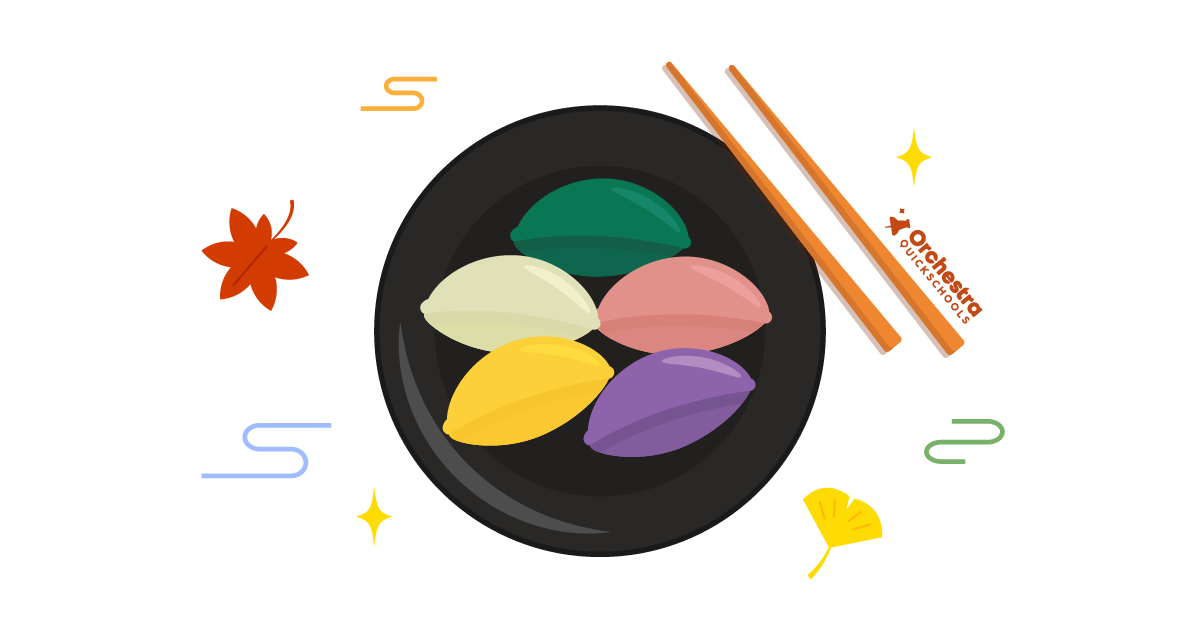
In South Korea, one of the most important traditional holidays is Chuseok. It is often described as a Korean harvest festival, but that description doesn’t tell the whole story. Chuseok is also deeply connected with family, ancestors, food, travel, and gratitude.
When is Chuseok?
Chuseok follows the lunar calendar, so its date changes each year. It generally falls in September or October. Its timing is connected with the autumn harvest, making it one of the clearest examples on this list of a celebration with a strong seasonal and agricultural connection. Historically, harvest time was extremely important. Communities depended on successful crops for food and survival, so gathering after the harvest provided an opportunity to celebrate and give thanks.
What do families do?
Chuseok is a major family holiday. Many people travel to their hometowns to spend time with relatives. Families may prepare elaborate meals and participate in traditions honoring ancestors. One traditional practice is charye, a memorial ceremony in which families pay respects to their ancestors.
What do they eat?
Food is a major part of Chuseok. One famous Chuseok food is songpyeon, a type of rice cake traditionally shaped like a half-moon. Families may make songpyeon together, and fillings and preparation styles can vary. Other foods may include meats, vegetables, rice dishes, fruit, and other seasonal foods.
Why is Chuseok important?
Chuseok illustrates how food can represent much more than simply eating. A shared meal can connect generations, family history, gratitude, and the agricultural cycle. It also shows how modern celebrations can preserve traditions even when daily life has changed dramatically.
Canadian Thanksgiving — Canada
Canadian Thanksgiving is celebrated on the second Monday of October and is an opportunity for many families to gather, share a meal, and express gratitude.
Why is Thanksgiving in October?
Canada’s Thanksgiving tradition has developed from a combination of European harvest customs, historical observances, and Canada’s own cultural history. The October timing also places the celebration closer to the traditional end of the harvest season in much of Canada. But it is important not to think of Thanksgiving as one identical experience for every Canadian family. Some celebrate with large gatherings and traditional meals, while others may have smaller or completely different traditions.
What do people do?
For many families, Thanksgiving means spending time together and sharing a special meal. Turkey is commonly served, along with foods such as potatoes, vegetables, stuffing, cranberry sauce, and pumpkin pie. However, the deeper theme is gratitude. People reflect on family, friendships, food, home, health, nature, or other things they appreciate.
How is it different from U.S. Thanksgiving?
The biggest obvious difference is the date: Canadian Thanksgiving takes place in October, while Thanksgiving in the United States takes place in November. The histories and traditions of the two holidays also developed differently, even though both are associated with gratitude, family, and harvest traditions.
Alpabzug — Switzerland

In Switzerland, Alpabzug or Alpabfahrt is a traditional seasonal event marking the return of cows from high alpine pastures to the valleys. And it is one of the clearest examples of how geography and agriculture can shape culture.
What is an Alpabzug?
During the warmer months, farmers may take cattle to high mountain pastures where the animals can graze. When the season ends and the animals return to the villages, communities may mark the occasion with a festive procession. In some regions, cows are decorated with flowers and large bells, creating a spectacular sight as they make their way down from the mountains.
Why does it happen in the fall?
Unlike some of the celebrations on this list, the timing of Alpabzug is directly connected to the changing season. As temperatures fall and conditions in the high mountains become less suitable for grazing, the animals return to lower elevations.
How Teachers Can Turn These Celebrations In The Fall Into Learning
The best classroom activities should come after students understand the tradition, rather than reducing a culture to a craft or worksheet. Here are a few ways to extend the learning.
- Create a Global Celebration Map
Have students place each celebration on a world map and record where it takes place, when it occurs, why it is celebrated, and whether it is connected to harvest, religion, history, or another tradition.
- Compare Symbols
Choose two celebrations and compare their symbols. For example:
Mid-Autumn Festival: moon and lanterns
Diwali: diyas and rangoli
- Explore Food and Culture
Students can research one traditional food from each celebration and find out:
- What ingredients are used?
- Why is the food associated with the celebration?
- Is it eaten throughout the year or mainly during the celebration?
- Does its shape or preparation have symbolic meaning?
- Create a Cultural Calendar
Students can build a calendar showing when each celebration occurs and identify whether its date is determined by:
- A solar calendar
- A lunar calendar
- A historical date
- A seasonal or agricultural cycle
This is particularly useful because it helps students understand why different celebrations fall at different times each year.
- Teacher Discussion Questions
Or if you want something simple, these questions can help prompt a classroom discussion:
- Which tradition was most surprising to you, and why?
- What do several of these traditions have in common?
- How does geography influence cultural traditions?
- Why is food such an important part of seasonal celebrations?
- Which traditions are connected to agriculture?
- Which traditions are connected to historical events?
- How do different cultures express gratitude?
- How can we learn about another culture respectfully?
- Which tradition would you most like to learn more about?
- What autumn tradition is important in your own community?
Important Cultural Learning Guidelines
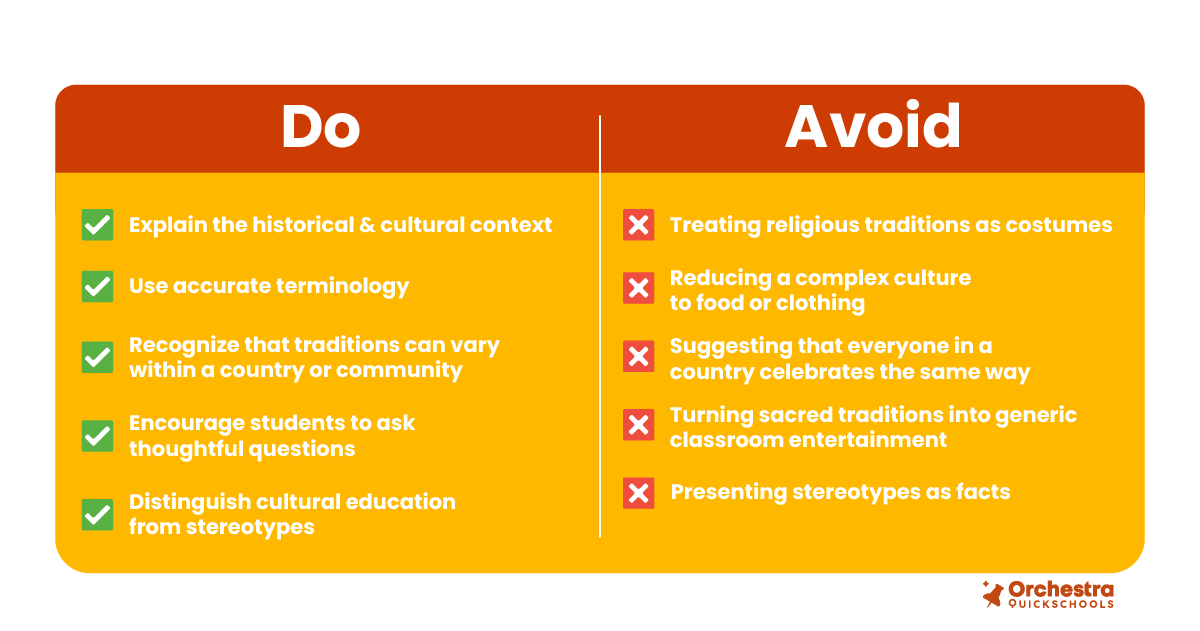
When teaching global traditions, encourage students to approach each culture with curiosity and respect.
Why Celebrations In The Fall Make Great Classroom Learning
Learning about seasonal celebrations can introduce students to geography, history, agriculture, art, music, food, and family traditions. It also encourages students to recognize that there isn’t one “right” way to celebrate a season. A classroom exploration of fall traditions can be as simple as reading about one festival each week or as creative as organizing an international autumn fair.
The most important lesson is respect. Students should learn about cultural traditions without stereotyping or treating meaningful customs as costumes or props. When traditions are presented in their historical and cultural context, they can become powerful opportunities for curiosity and understanding. So this fall, look beyond the falling leaves. There is a whole world of stories, celebrations, and traditions waiting to be discovered.
Frequently Asked Questions
Q: What are some celebrations in the fall around the world?
A: Examples include the Mid-Autumn Festival, Oktoberfest, Día de los Muertos, Diwali, Chuseok, Canadian Thanksgiving, Bonfire Night, Sukkot, Alpabzug, and harvest festivals.
Q: Which celebrations in the fall are connected to harvests?
A: Chuseok, Sukkot, Alpabzug, Canadian Thanksgiving, and many regional harvest festivals have strong connections to agriculture or seasonal harvests.
Q: What is a good classroom activity for learning about global fall celebrations?
A: A global fall festival works well. Students can research a tradition and present its history, food, symbols, geography, and cultural significance.
Q: How can teachers teach cultural traditions respectfully?
A: Teachers should provide historical context, avoid stereotypes, use accurate terminology, recognize cultural diversity, and distinguish meaningful cultural or religious practices from classroom entertainment.

