
The first few weeks of school shape more of the year than most people realize. The routines, expectations, and relationships built early on often determine how smoothly the rest of the year goes. Here are 5 must-have classroom starter kit essentials that can help you build structure, connection, and confidence from day one. We’ve also included a set of free, printable templates you can download and use straight away. So stay with us and keep reading!
- What Classroom Management Means
- Why the First Two Weeks Set the Tone For the Entire Year
- Your Classroom Starter Kit and Why They Work
- A Classroom Starter Kit That Builds Connection
What Classroom Management Means
Let’s get one thing straight: classroom management is not about control. Control only works when you’re there and policing every second. The moment you step away, it doesn’t take long for things to go sideways. The teachers with the calmest, most effortlessly well-behaved classes aren’t the ones running the tightest ship. Their students behave because the classroom makes sense to them, expectations feel fair, and they know what’s coming.
Educational research draws a clear line between authoritarian and authoritative classroom management styles.
- Authoritarian: Do it because I said so.
- Authoritative: Here’s what we do, why it matters, and how we’ll get there.
One gets short-term compliance and the other builds habits that stick. Authoritative classrooms produce better academic outcomes, better behaviour, and students who develop real self-regulation skills rather than just learning to comply when someone’s watching.
Why the First Two Weeks Set the Tone For the Entire Year
Students are paying close attention early on. They’re figuring you out and gauging what’s expected of them.
- What does this teacher actually care about?
- Which rules are real, and which ones fade after a few days?
- What happens when someone gets it wrong?
- Is this a place where I can settle in, or do I need to stay on guard?
Habits form fast. Both your students’ and yours. The routines you establish in those early days become the architecture of your classroom. Classes that start without clear routines, a sense of who the teacher is, or shared expectations, tend to drift.
Your Classroom Starter Kit and Why They Work
1 — Introduce yourself before they walk in

Here’s something that gets overlooked in most teacher preparation: your students have been wondering about you since they found out they’d be in your class. They might have even started forming opinions about you before they’ve met you. I remember meeting my physics teacher for the first time, and he looked so scary that we all walked into the classroom terrified. However, he became one of our favorite teachers, and some of us are even friends with him to this day.
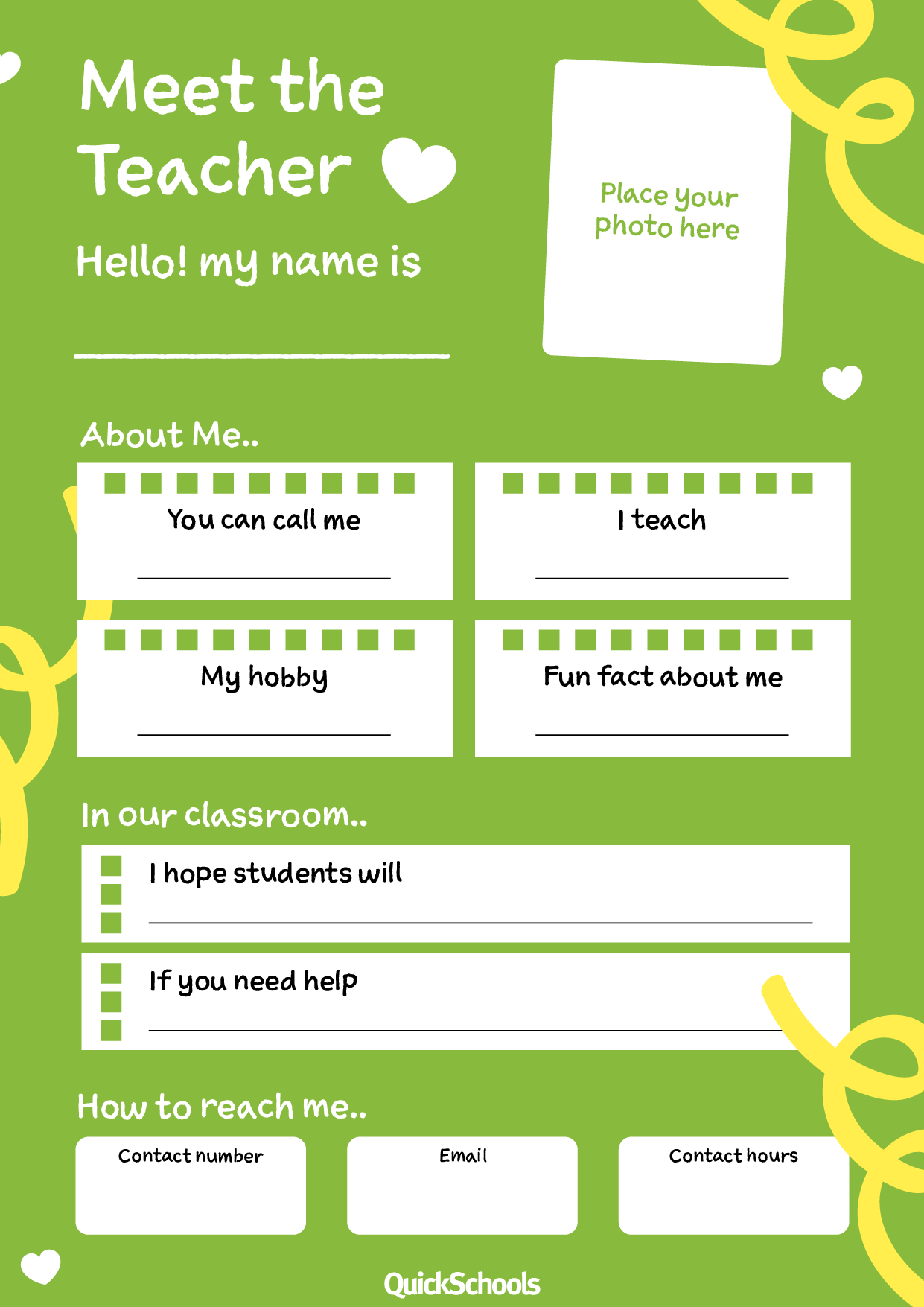
When you share something personal about yourself, like your favourite book, the animal you identify with, the holiday that matters most to you, or simply your favourite comfort food, you stop being just “the teacher” and become a “real person” in the classroom. Research in educational psychology consistently shows that students perform better when they feel connected to their teachers. It also lowers the psychological barrier to taking risks (asking questions, admitting confusion, or trying things you might fail at). A classroom built on relationships is a classroom built for learning. The Meet the Teacher template is a simple way to introduce yourself to students, and a few simple icebreaker activities can help break that initial awkwardness and make the classroom more comfortable.
How to use this template
Fill it in honestly, but keep it light. A favourite colour and a beloved book are more than enough to humanise you. Post it on your classroom door or bulletin board before the first day, and consider including it in your welcome packet for parents.

2 — Create rules with your students

Think back to a rule you’ve had to follow that you had no say in shaping. How did it feel? Probably somewhere between neutral and resentful. Now compare that to something you helped create. Something you agreed on and felt was fair as it was being built. Entirely different feeling, right?
Your students are no different. When children help create the rules they’re expected to follow, something shifts in how they relate to those rules. It’s backed by the self-determination theory. When people feel autonomous, they develop intrinsic motivation to uphold that structure.
So instead of presenting a finished list of rules on day one, you guide your students to build them together. Ask them what respect looks like in this room, how they’d want to be treated if they were upset or struggling, and what helps them focus and what gets in the way.
How to run the rules discussion
Some prompts that work well:
- “What do you need to feel safe enough to speak up in class?”
- “What makes it hard to concentrate? What helps?”
- “How do you want us to treat each other when someone makes a mistake?”
- “What should someone do if they’re feeling left out?”
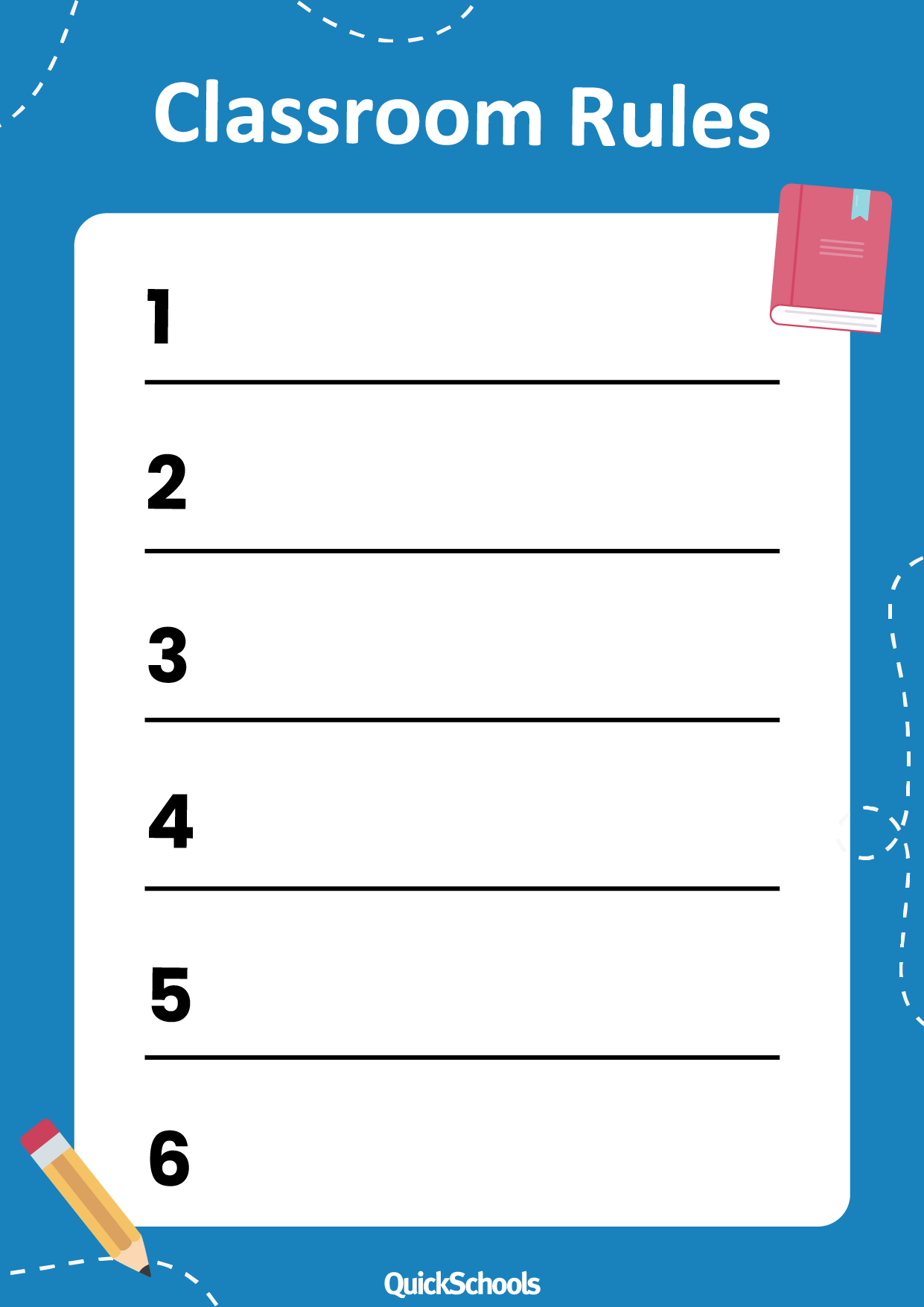
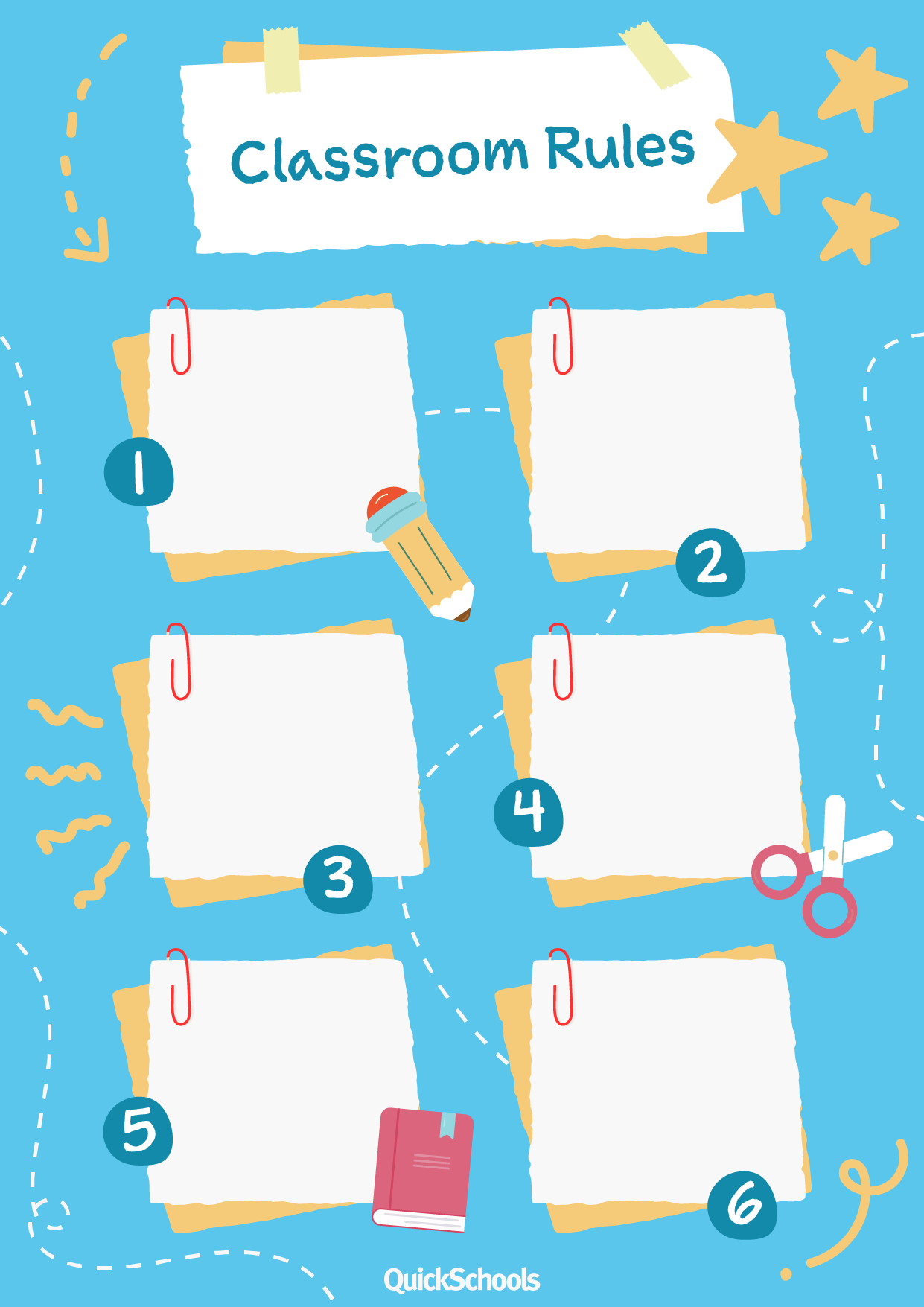
Consolidate their responses into 4–5 clear statements and phrase them positively. For example, “we listen when others are speaking” rather than “no interrupting.” Write them together on the printable. In the future, if something slips, the rules that students helped create are far easier to revisit when they’re broken. Instead of “you’re breaking the rule I made”, you can say “remember what we decided together about this?” and that shift in language changes everything about how the conversation feels.
3 — Design Your Physical Space Intentionally
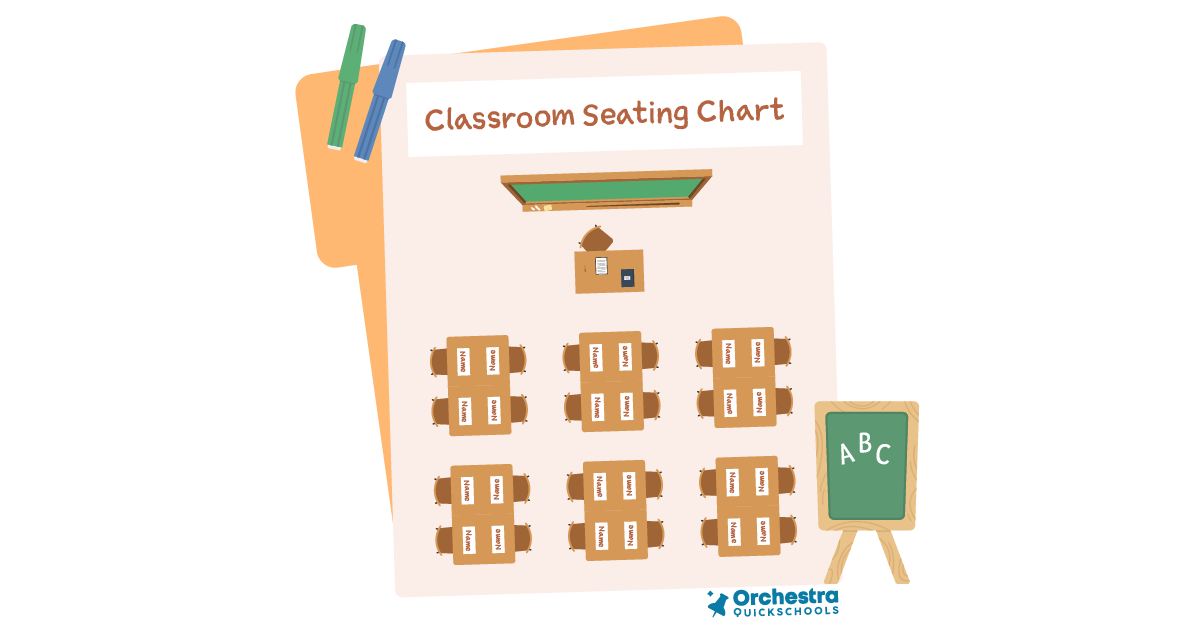
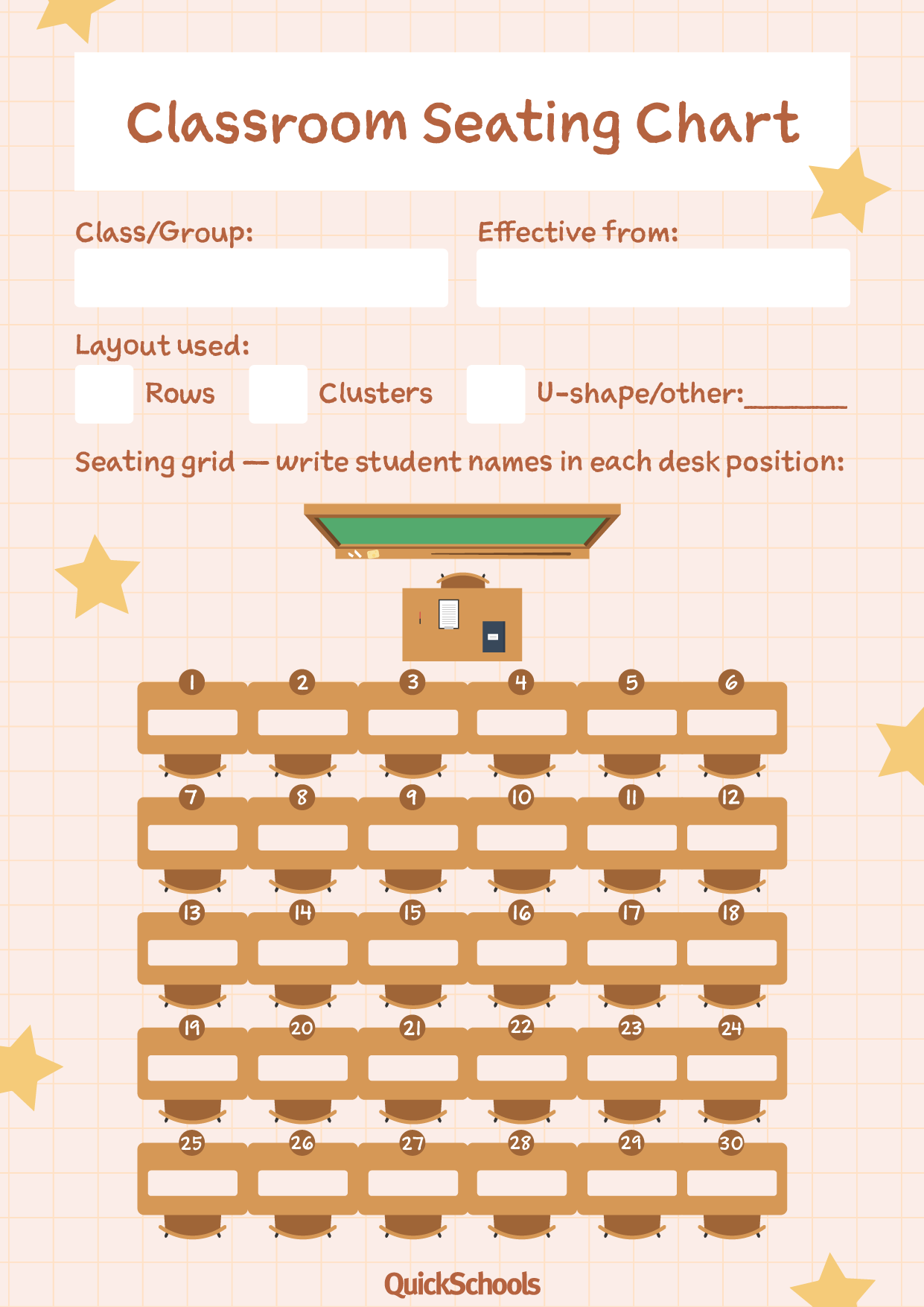
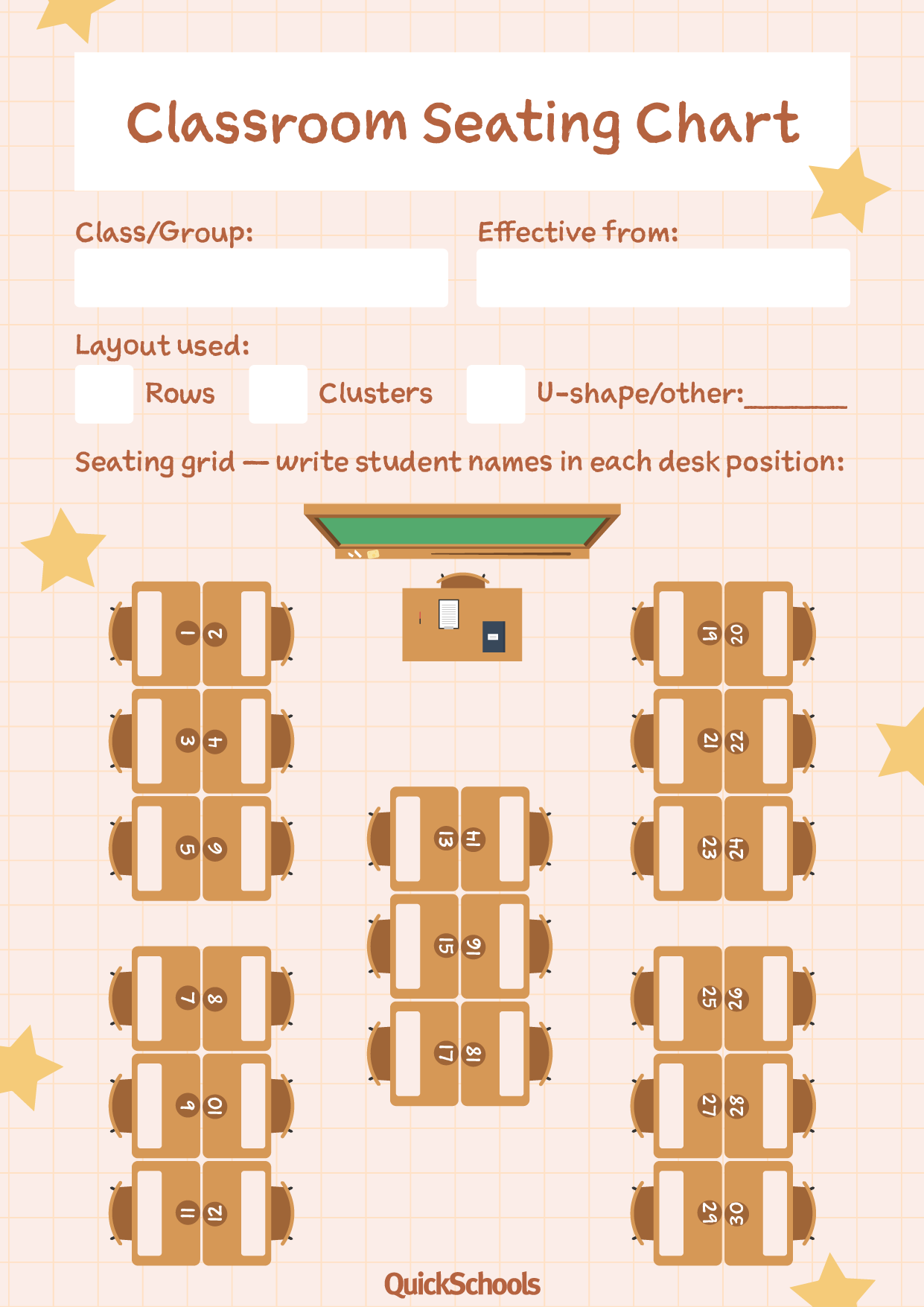
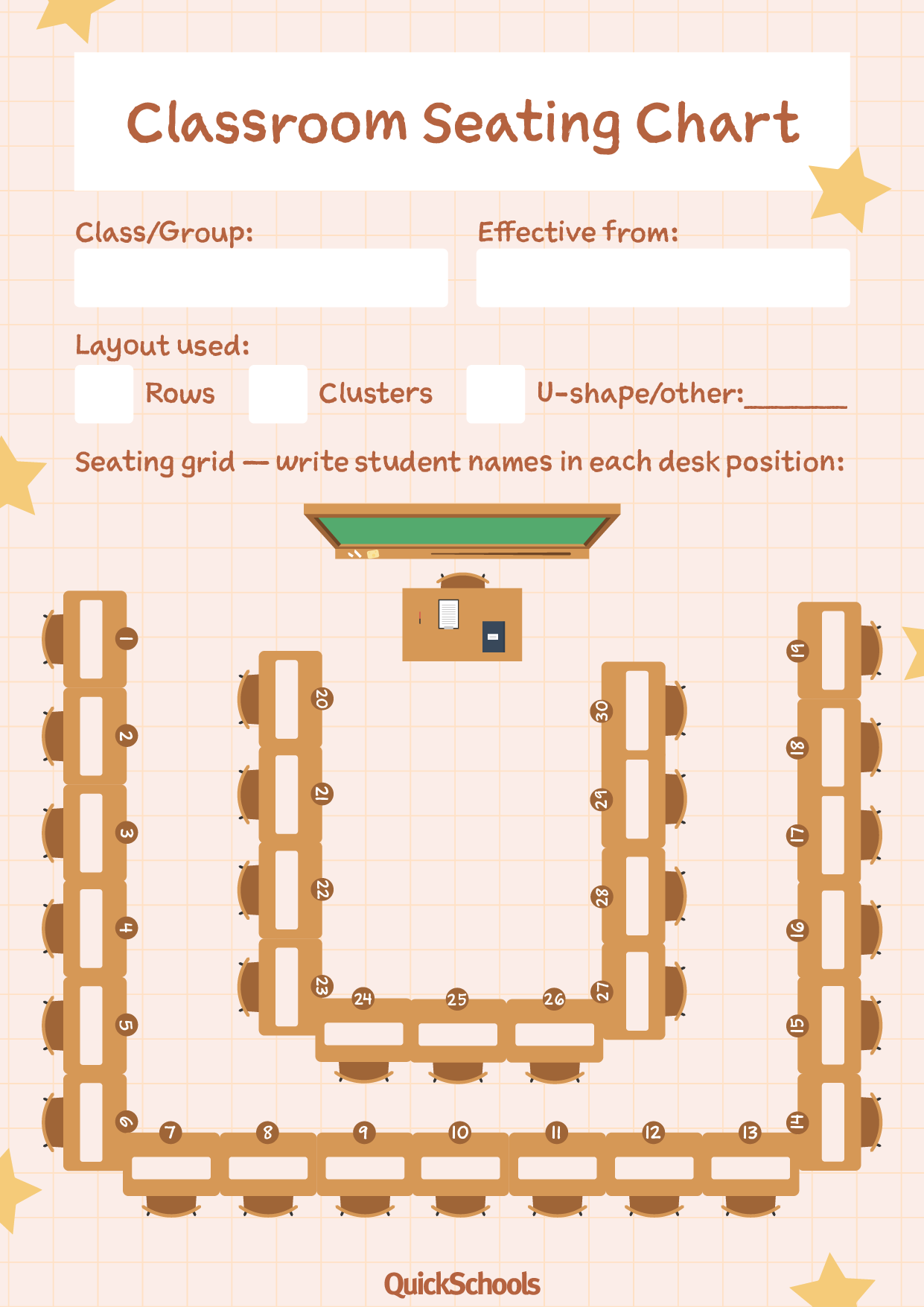
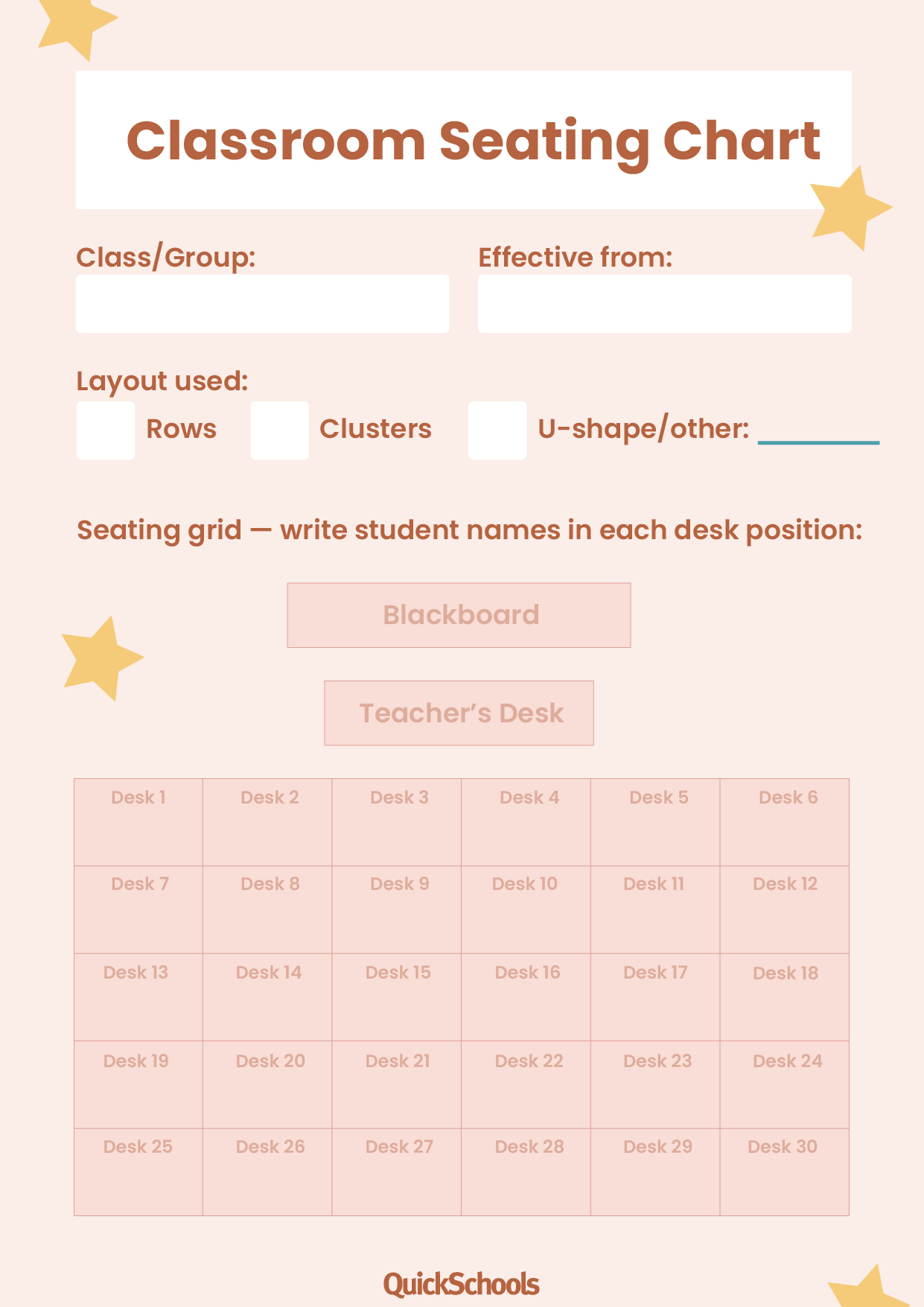
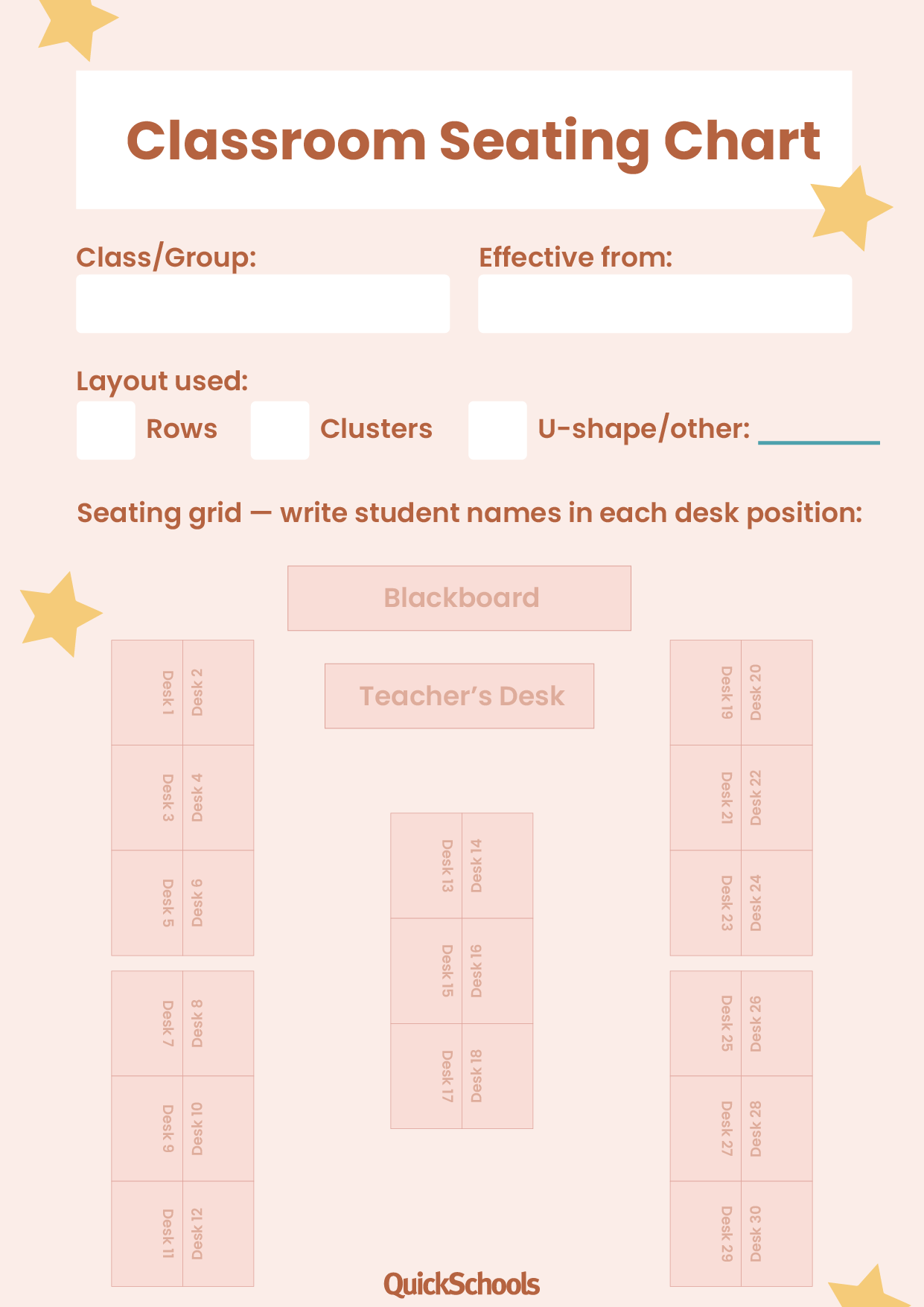
Walk into any classroom, and you can read the teaching philosophy from the classroom design alone. Rows facing the front say: information flows one way, from teacher to student, and your job is to receive it. Clusters of desks say: you’ll be working together here, your peers are resources, and collaboration is expected. A U-shape says: everyone’s voice has a place in this room, and discussion is central.
None of these is universally right. The right layout depends on how you teach and what you’re teaching.
A quick guide to the three main layouts
| Layout | Best for | Watch out for |
| Rows | Direct instruction, tests, and focused individual work | Students at the back can feel disconnected, and it limits peer collaboration |
| Clusters | Group work, project-based learning, cooperative tasks | More off-task conversation; harder to monitor all students |
| U-shape | Class discussions, Socratic seminars, inclusive debate | Works best with smaller classes; large groups can feel impersonal |
Quick tip: Use seating changes as a management tool, not a punishment. Rotating seats every few weeks prevents social cliques from getting too settled, gives every student the experience of different neighbours, and removes the loaded meaning of “move your seat” as a consequence.

4 — Build a Culture of Ownership and Responsibility
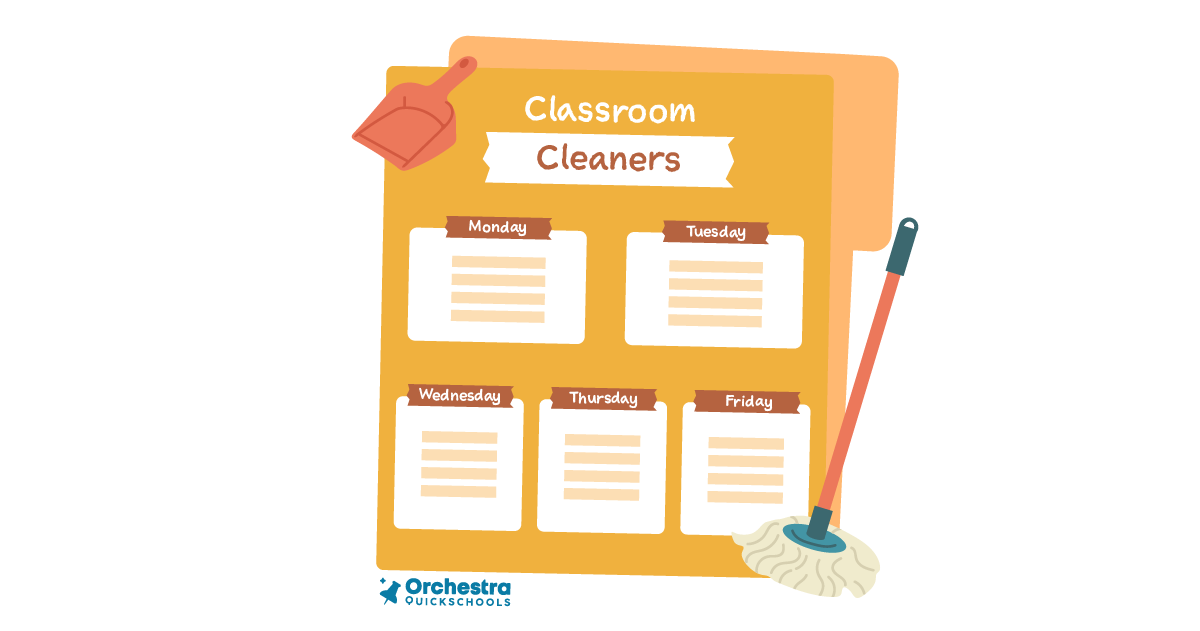
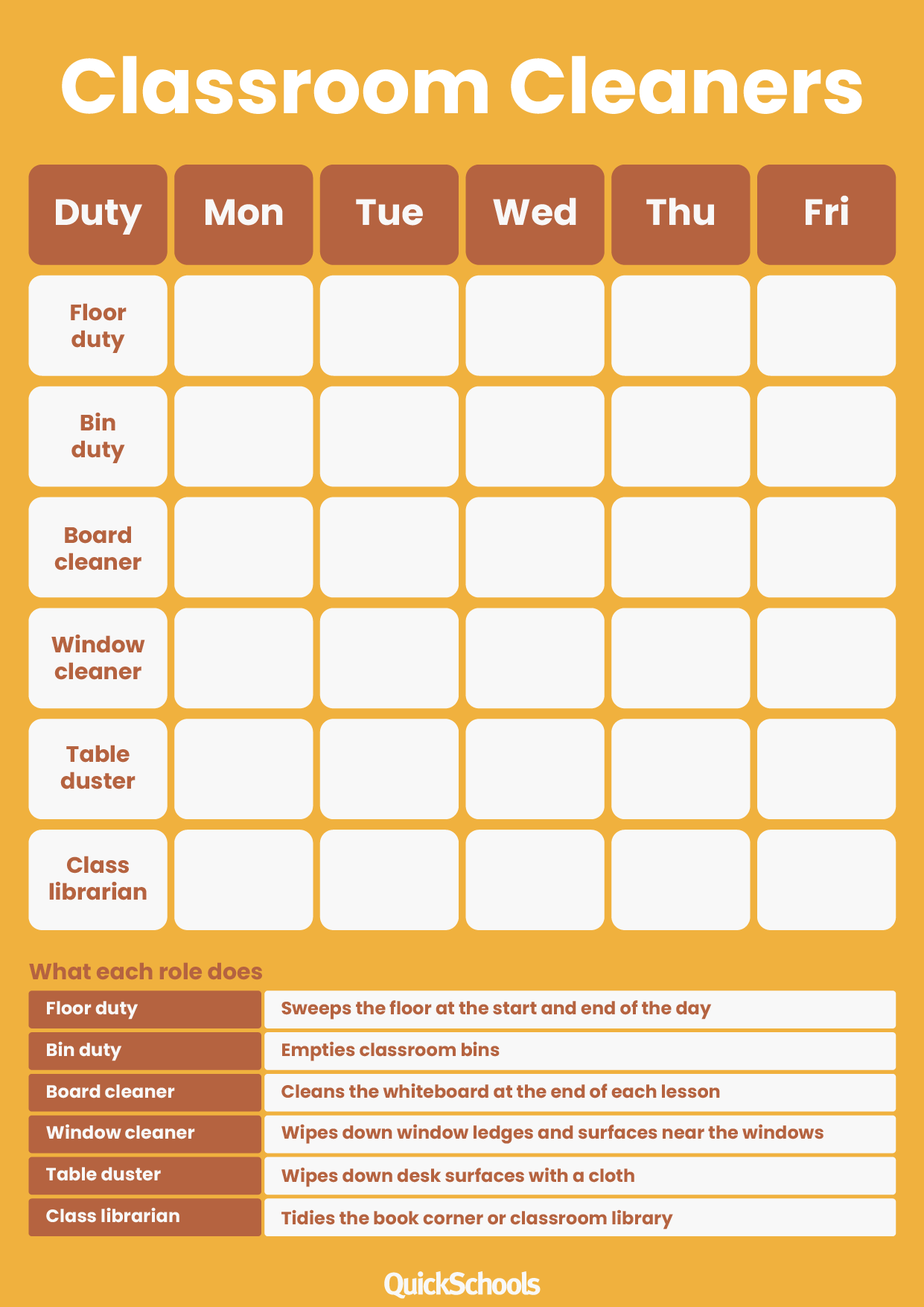
When you give students real responsibilities for maintaining their shared space, they start seeing the classroom as theirs, and that naturally also builds a sense of belonging. After a while, you stop needing to constantly remind students to do so. They start taking ownership of the space themselves and even holding each other accountable for things like sweeping, cleaning, dusting, and keeping the classroom comfortable for everyone.
There’s a broader point here, too. If we want young people to grow into active citizens who look after their communities, we start small. The habits of care and shared responsibility that a classroom roster builds are the same habits that make a good neighbour, a good colleague, a good citizen.
You can give the roles proper titles. “Floor manager” lands differently than “sweeping.” “Window monitor” sounds like a real job because it is one. Small language choices like these signal that you take the responsibilities seriously, which tells students they should too.

5 — Keep Parents In the Loop

The parent-teacher relationship shapes far more of a child’s school experience than most people realise. When communication is open and respectful, parents stop feeling like outsiders looking in and start feeling like partners in their child’s learning. When that relationship never really gets established, even small misunderstandings can grow into bigger problems than they needed to be.
How to use the Parent-Teacher Conference form
You probably won’t need this form often. Most schools now use digital student information systems, which means records, grades, and updates can usually be accessed instantly through the parent portal. But during face-to-face meetings, a physical form still serves a purpose. Some conversations are simply easier to have when everyone has something tangible in front of them. It keeps the discussion clear, focused, and easier to refer back to afterwards.


A Classroom Starter Kit That Builds Connection
Looking back, most of the teachers we remember fondly weren’t necessarily the most organised or with the perfectly colour-coded systems. (But hey, if you’re one of those teachers, genuinely, kudos to you!) They were usually the ones who made the classroom feel safe. The ones who were easy to talk to and had routines that made sense.
We hope these free printable templates help make those first few weeks a little less overwhelming. And maybe, one day, your students will remember your classroom fondly too. Let us know if there are other templates or classroom printables you’d like to see! We’re always looking for ways to make teachers’ lives a little easier.

