
Valentine’s Day is traditionally a day associated with love, appreciation, and meaningful relationships. In schools, that idea can naturally translate to friendships and a sense of belonging. It can just as easily be a moment for friend-lentines, gal-entines, or simply a classroom celebration of how students support one another. Although there may not be a perfect, catchy name for a classroom version of Valentine’s Day, it still presents an opportunity to create space for purposeful classroom activities that foster teamwork, kindness, and connection.
- 1. The Compliment Relay
- 2. Kindness Bingo
- 3. The Classroom Appreciation Wall
- 4. Partner Challenge Stations
- 5. “What Makes a Great Teammate?” Mini Workshop
- 6. The Secret Kindness Partner
- 7. Valentine’s Day Problem-Solving Scenarios
- 8. Build a “Kindness Machine.”
- 9. Group Valentine Card Challenge
- 10. Class Playlist of Positivity
- Small Moments, Big Impact
1. The Compliment Relay
Time: 10–15 minutes
Students sit in small teams and begin with a single sheet of paper. Each student writes one sincere, specific compliment for a teammate and then passes the paper to the next person. The paper continues rotating until every student in the group has received at least one message.
Before starting, remind students that the goal is not to be funny or generic, but to notice real contributions. This activity helps students see their classmates as capable partners and valuable members of a learning team, which directly supports more positive and cooperative group work later in the term.
You can improve the quality of responses by displaying or projecting prompts such as:
- “Something this person does well during group work is…”
- “A time this person helped me or our group was…”
- “One strength I notice in this person is…”
- “This person makes class better because…”
- “I appreciate how this person shows responsibility by…”
When students read their messages at the end, many begin to recognize peers they may not normally work with as reliable and supportive teammates—shifting classroom dynamics in a very natural way.
2. Kindness Bingo
Time: One day to one week
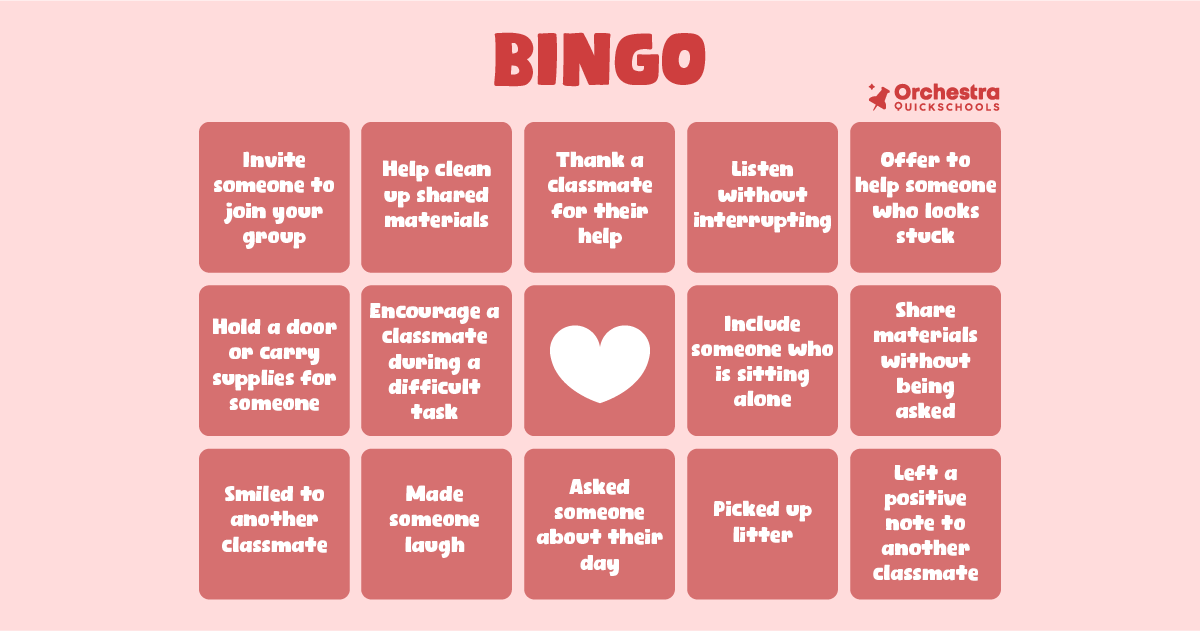
Create bingo cards filled with small, realistic, and observable kindness actions that students can complete during normal school routines. Students may work toward a line or a full card either individually or as a class.
Examples for the bingo squares:
- Invite someone to join your group
- Help clean up shared materials
- Thank a classmate for their help
- Listen without interrupting
- Offer to help someone who looks stuck
- Hold a door or carry supplies for someone
- Encourage a classmate during a difficult task
- Include someone who is sitting alone
- Share materials without being asked
Because students must look for opportunities to support others during regular lessons, kindness becomes part of daily behavior rather than a one-time activity. The structure gently shifts attention away from what students receive on Valentine’s Day and toward how they contribute to the classroom community.
To deepen reflection, you can end the week with short prompts such as:
- “Which action felt easiest for you?”
- “Which action felt most meaningful?”
- “What did you notice about how people reacted?”
3. The Classroom Appreciation Wall
Time: 20 minutes + ongoing use
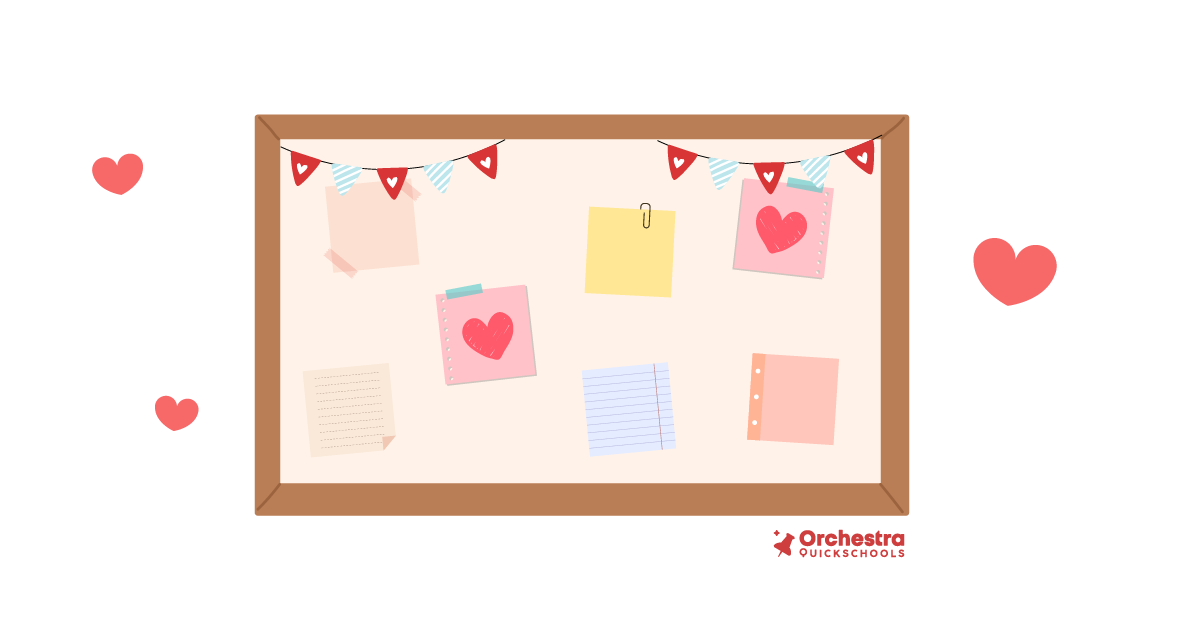
Create a large poster or bulletin board titled: “What I Appreciate About Our Class.”
Students anonymously add sticky notes that recognize classmates and positive classroom behaviors. Because contributions are anonymous, students often feel more comfortable acknowledging peers who are quiet, reserved, or rarely publicly recognized.
Encourage students to focus on behaviors rather than popularity by offering prompts such as:
- “I appreciate when someone in this class…”
- “Thank you to the person who helped me when…”
- “I notice that our class works well together when…”
- “Someone who makes learning easier for me is… because…”
- “A small but important thing someone did was…”
Over time, this wall becomes a visible model of the culture you want to grow. Students begin to notice and reinforce behaviors like cooperation, patience, and encouragement, which can help those behaviors become part of everyday classroom norms.
4. Partner Challenge Stations
Time: One class period
Set up four to six short challenge stations around the room. Each station should be brief, solvable within a few minutes, and require collaboration rather than individual work.
Examples include:
- A short logic or pattern puzzle
- A paper-only tower or bridge building
- A short escape-room style riddle
- A “draw it without seeing it” communication challenge
- A sorting or sequencing task with limited instructions
Students rotate through the stations with one partner. Design the challenges so that no single student can complete the task alone. This naturally requires students to explain ideas clearly, listen to another perspective, negotiate decisions, and divide responsibilities. Students get to practice teamwork skills authentically, without feeling as though they are in a formal lesson about collaboration.
5. “What Makes a Great Teammate?” Mini Workshop

Time: 20 minutes
Students work in small groups to reflect on real classroom experiences with group work. They brainstorm responses to questions such as:
- What makes someone easy to work with?
- What makes group work frustrating?
- What behaviors help everyone succeed?
- What behaviors make a group less productive?
- What should a teammate do when someone is struggling?
Groups then create short posters or slides summarizing their ideas. Because students generate the expectations themselves, they develop a shared and realistic understanding of what effective teamwork actually looks like. This makes later reminders during group projects feel more meaningful and less like teacher-imposed rules.
6. The Secret Kindness Partner
Time: One to three days
Each student is secretly assigned a classmate to support through small, thoughtful actions. Students are encouraged to focus on subtle, genuine behaviors rather than obvious gifts.
Examples of actions include:
- Offering quiet help during work time
- Giving encouraging or reassuring comments
- Including their partner in group or partner work
- Sitting with them or partnering when possible
- Helping them organize materials
- Standing up for them or supporting them socially
Because the partner is secret, students must be attentive to how their actions affect others rather than seeking recognition. This helps build empathy and awareness of classmates who may need encouragement or inclusion. At the end of the activity, students can also try to guess who their kindness partner was.
7. Valentine’s Day Problem-Solving Scenarios

Time: 20–30 minutes
Provide small groups with short, realistic classroom scenarios related to teamwork and emotional awareness, such as:
- A group project member isn’t participating.
- Two students want to lead the same task.
- A teammate seems overwhelmed and shuts down.
- One student feels ignored during group discussions.
- A group finishes early but one person feels left out.
Groups discuss how they would respond and prepare a brief explanation or role-play showing a possible solution. This activity allows students to practice navigating conflict, leadership, and emotional challenges in a safe and neutral setting. It builds social problem-solving skills without referencing actual classroom conflicts or singling out individuals.
8. Build a “Kindness Machine.”
Time: One class period
In teams, students design and build a simple machine using paper, cardboard, or recycled materials that delivers kindness in some form, like notes, compliments, encouraging messages, or thank-you cards.
Teams must decide together:
- What kind of kindness will their machine deliver
- How it will operate
- How responsibilities will be shared
This project naturally combines creativity, basic design thinking, and teamwork. Students must plan, test ideas, revise designs, and solve problems collaboratively. The focus on kindness gives the project a meaningful purpose beyond simply building something.
9. Group Valentine Card Challenge
Time: 15–25 minutes
Instead of creating individual cards, small groups design one large Valentine card for a shared audience, such as:
- another class
- a group of teachers or staff
- custodial staff, office staff, or support staff
- a community partner
Groups must agree on a theme, message, design, and layout. This encourages students to listen to each other’s ideas and make collective decisions.
10. Class Playlist of Positivity
Time: 15 minutes
Students suggest school-appropriate songs that promote positivity, confidence, resilience, or teamwork. The class then curates a shared playlist that can be used during independent or group work time.
Before collecting suggestions, set clear guidelines:
- Lyrics must be appropriate for school
- Songs should connect to positive messages
- Songs should help create a productive classroom atmosphere
To deepen the activity, ask students to briefly explain their choices using prompts such as:
- “Which lyric connects to teamwork or encouragement?”
- “How does this song help you stay motivated?”
- “What feeling does this song create during work time?”
By contributing to a shared classroom resource, students develop a sense of ownership over the learning environment and participate in shaping a positive classroom culture that supports focus and collaboration.
Small Moments, Big Impact
These activities are intentionally simple, flexible, and adaptable, making them easy to integrate into a regular lesson. Teachers can use them as short starters, end-of-lesson reflections, or brief community-building moments that sit comfortably alongside academic instruction.
While Valentine’s Day offers a convenient and timely reason to focus on relationships, these activities are not limited to one day on the calendar. They can be used at any point in the school year. We hope these ideas help you create small, meaningful opportunities for students to practice teamwork, kindness, and connection. Whether you think of it as Valentine’s Day, friend-lentines, or simply a community-building moment, the goal is helping students learn how to work well with others; an outcome that lasts far beyond one day on the calendar.
 Blog
Blog 