

Students often find themselves at a crossroads in the quest for academic success. Should you cram for exams at the last minute or adopt a more measured approach with long-term study? This dilemma is common, and striking the right balance between these two study methods can make all the difference in achieving effective learning outcomes.
- Exploring the Effects of Cramming vs. Long-Term Study
- The Pitfalls of Cramming: Why Last-Minute Studying Isn’t Sustainable
- The Challenges of Long-Term Study: Why Prolonged Preparation Has Its Downfalls
- Practical Tips for Balancing Cramming and Long-Term Study
- Incorporating Cramming and Long-Term Study Into Your Study Routine
Exploring the Effects of Cramming vs. Long-Term Study
To understand the merits of both approaches, it’s essential to delve into the science of learning and memory. Research shows that long-term study, characterized by spaced repetition and regular review, leads to better retention and understanding of the subject. This is due to a phenomenon such as the forgetting curve, which demonstrates that information is more likely to be retained when it’s revisited at spaced intervals over time.
Pros and Cons of Cramming vs. Long-Term Study

Share this image on your site by copying the code below:
</p>
<p><strong>Click for the original infographic from Orchestra by QuickSchools.</strong></p>
<p><a href='https://onlinemasterscheduler.com/2024/04/30/cramming-vs-long-term-study-how-to-find-the-right-balance/'><img src='https://blog.quickschools.com/wp-content/uploads/2024/04/study-balance-blog-cover-visual-1-1024x614.png?w=768?w=950' alt='Cramming vs Long-Form Study' 540px /></a></p>
<p>
The Pitfalls of Cramming: Why Last-Minute Studying Isn’t Sustainable

Cramming, the age-old method of stuffing information into your brain at the eleventh hour, might seem like a lifesaver when time is short, but its drawbacks outweigh its benefits.
1. Short-Term Retention
Cramming may yield immediate results, but its effectiveness diminishes over time. Research indicates that information learned through cramming is quickly forgotten as it is not properly encoded into long-term memory. Consequently, while you might excel in tomorrow’s exam, recalling the same information weeks or months later becomes challenging.
2. Increased Stress and Anxiety
The rush to cover extensive material in a short period often leads to heightened stress levels. The pressure to perform well under these circumstances can be overwhelming, contributing to anxiety and burnout. This cycle of stress can have detrimental effects on mental and emotional well-being, impacting overall performance.
3. Superficial Understanding
Solely relying on cramming fosters a shallow understanding of the material. Instead of engaging with the content meaningfully, students memorize facts without grasping underlying concepts. Consequently, critical thinking skills and the ability to apply knowledge to real-world scenarios are compromised, leaving students ill-prepared for future challenges.
The Challenges of Long-Term Study: Why Prolonged Preparation Has Its Downfalls
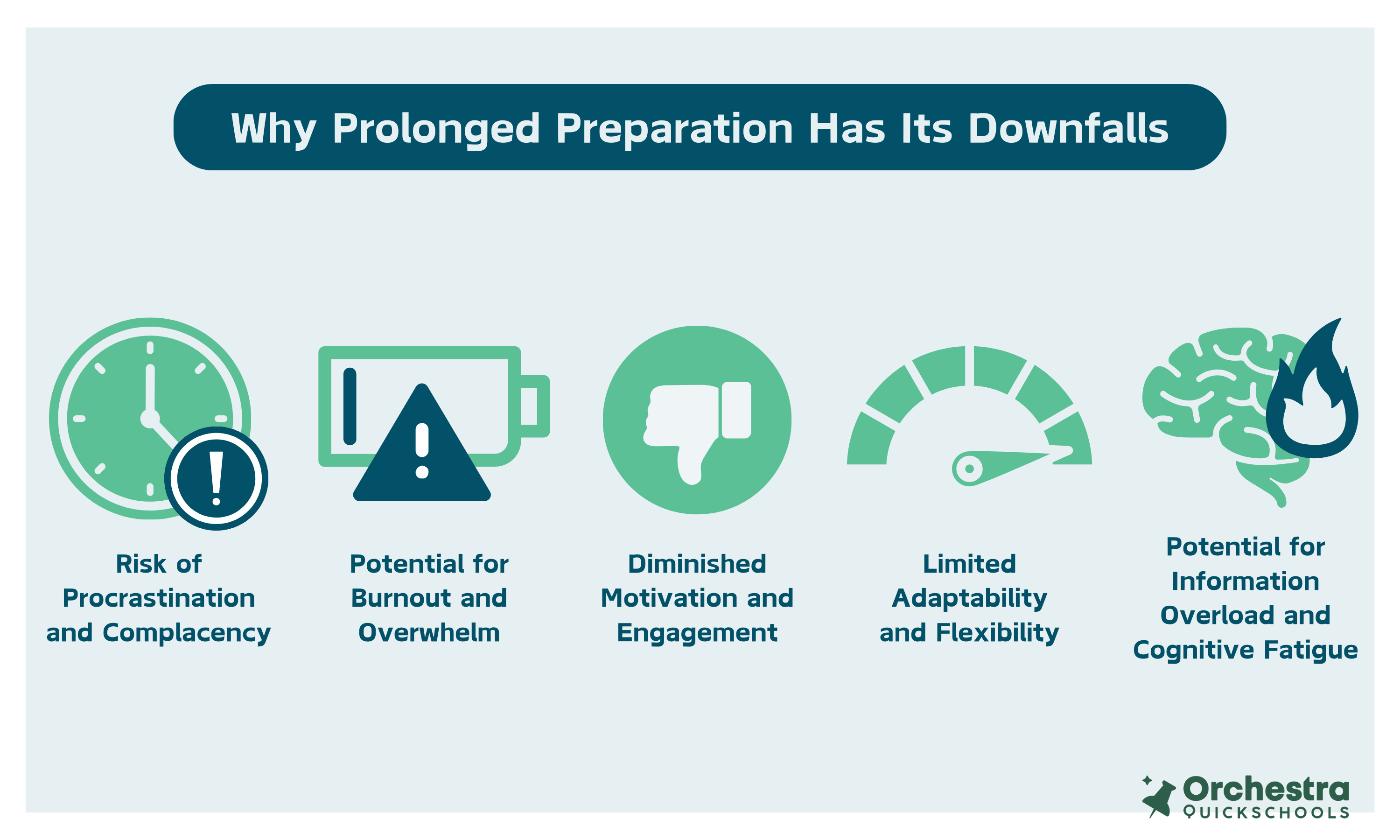
While long-term study is often touted as the gold standard for effective learning, it’s essential to recognize that this approach also comes with its challenges. Here, we delve into the drawbacks of relying solely on long-term study and explore why prolonged preparation may not always lead to optimal outcomes.
1. Risk of Procrastination and Complacency
Long-term study requires consistent effort and discipline over an extended period. However, the length of the preparation period can sometimes lead to procrastination and a false sense of security. Students may fall into the trap of thinking they have ample time to cover the material, only to find themselves scrambling to catch up as exams draw nearer. This procrastination can hinder productivity and result in subpar performance on exams.
2. Potential for Burnout and Overwhelm
Extended periods of intense study can take a toll on students’ mental and emotional well-being, leading to burnout and overwhelm. The pressure to maintain a rigorous study schedule over weeks or months can become overwhelming, especially when coupled with other academic or personal responsibilities. Burnout not only affects academic performance but also contributes to increased stress levels and decreased motivation.
3. Diminished Motivation and Engagement
As the novelty of long-term study wears off, students may experience diminished motivation and engagement with the material. Prolonged exposure to the same content can lead to boredom and apathy, making it challenging to stay focused and retain information effectively. Without active engagement and interest in the material, students are less likely to achieve a deep understanding and mastery of the subject matter.
4. Limited Adaptability and Flexibility
Long-term study plans are often designed based on initial assumptions about the scope and content of exams. However, circumstances can change, and unexpected curveballs may arise that require students to adapt their study strategies on the fly. Rigid adherence to a long-term study plan can hinder flexibility and prevent students from effectively responding to new information or evolving exam requirements.
5. Potential for Information Overload and Cognitive Fatigue
Extended study sessions over a prolonged period can lead to information overload and cognitive fatigue. Trying to absorb and retain large volumes of information without adequate breaks or periods of rest can overwhelm the brain’s capacity to process and store new knowledge effectively. This can result in exam anxiety and reduced ability to perform well on exams.
While long-term study offers many benefits, it’s essential to be aware of its potential pitfalls and limitations. By addressing these challenges proactively and adopting a balanced approach that incorporates both long-term study and shorter-term review strategies, students can maximize their learning potential and achieve success in their academic pursuits.
Practical Tips for Balancing Cramming and Long-Term Study
There are several practical strategies for those struggling to strike the right balance between cramming and long-term study. Start by creating a study schedule that allocates time for both short-term review sessions and longer-term study goals. Master study techniques such as spaced repetition and active recall to reinforce learning over time. Additionally, prioritize self-care and stress management to ensure optimal cognitive function during study sessions.
On top of that, mix up your study methods to keep learning engaging and effective. You could also set realistic goals to stay motivated and on track. Furthermore, staying organized also plays a big part in learning. For instance, keep your study materials in order and create a designated study space without distractions. Remember to celebrate your progress, no matter how small, and adjust your goals as needed.
Incorporating Cramming and Long-Term Study Into Your Study Routine
Ultimately, the key to academic success is finding a harmonious balance between cramming and long-term study. Rather than viewing these methods as mutually exclusive, consider them as complementary tools in your study arsenal. By incorporating elements of both approaches into your study routine, you can harness the benefits of short-term review and long-term retention to achieve your academic goals.
In conclusion, while the debate between cramming and long-term study may continue, it’s clear that neither approach is inherently superior. Instead, it’s about finding what works best for you and adapting your study habits. By striking the right balance between cramming and long-term study, you can unlock your full academic potential and embark on a journey of lifelong learning.
Let us know which is your preferred study method. We would love to hear your tips as well! We wish all those with exams coming up the very best of luck!
 Blog
Blog 

One thought on “Cramming Vs. Long-Term Study: How to Find The Right Balance”